

Aerial Firefighting · Fleet
Our Fleet

The AT-802F - first aircraft designed from the ground up for fire fighting
The AT-802F employs a level of technology in fire gate controls not found in any other aircraft used for this purpose. The pilot may select a coverage level, amount of retardant to be dropped, make a ground speed correction and depend on the aircraft computer to make continuous door opening adjustments to provide an even flow rate through the doors for even coverage on the ground. An accelerometer senses turbulence or airplane pitch accelerations and adjusts door openings accordingly.
Fleet
01 / 02
Air Tractor AT802F
Powered by a Pratt & Whitney PT6A-67F turboprop driving a 3,028-litre hopper at a max takeoff weight of 7,257 kg. Configured for aerial application and firebombing.
Current Service Areas
Every fire season, our AT-802Fs are positioned on bases across Australia under contract to state fire agencies. Forward-deployed means faster response. It's how single-engine air tankers earn their place in initial attack, and how Field Air has supported Australian firefighting for decades.
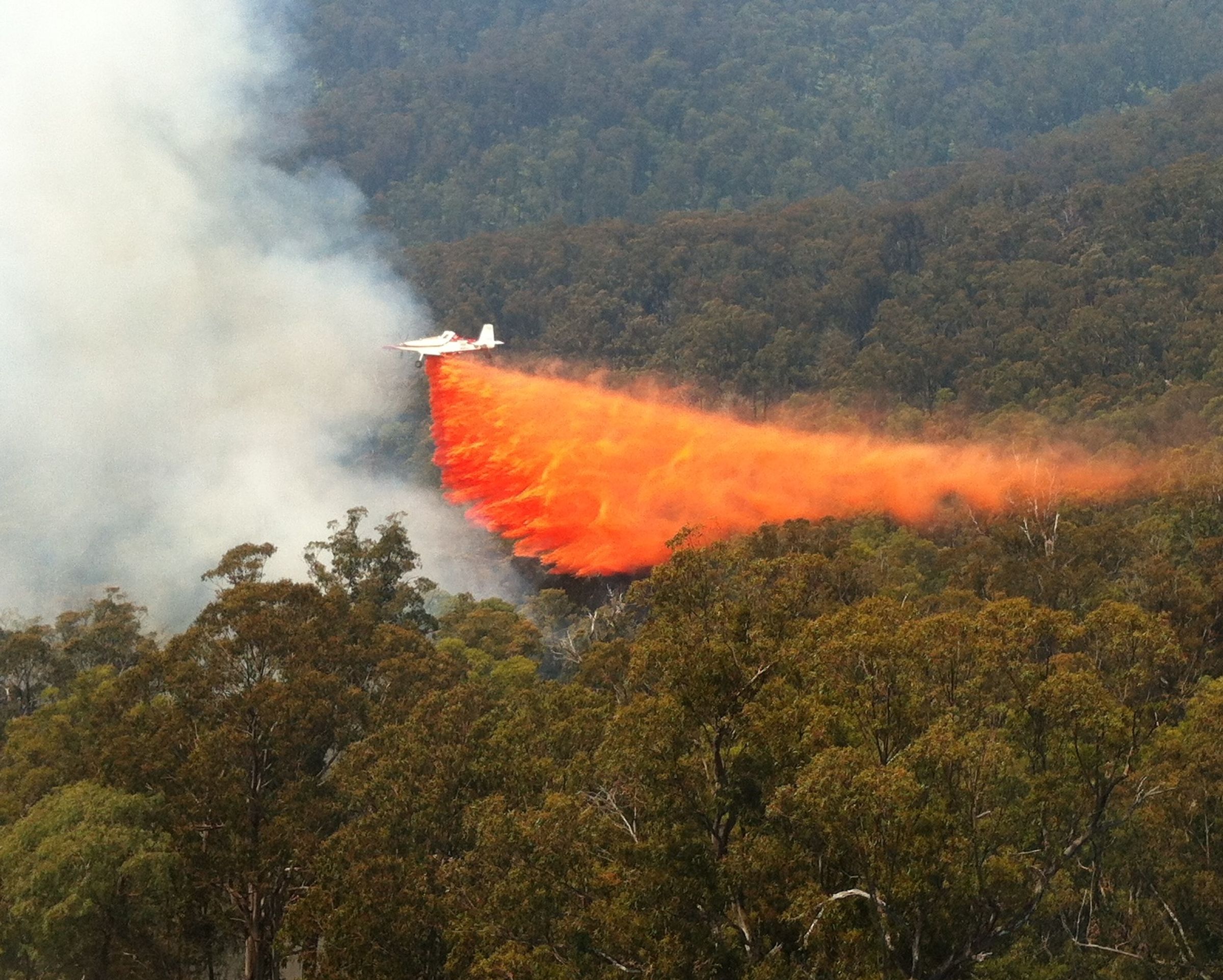
You want something on the fire before it gets away from you. The 802F can be wheels-up in minutes and putting retardant down while it's still small - that could be the difference between a quick knockdown and a campaign fire.
Stephen Holding·General Manager Field Air
International Fire Support
Field Air is proud to support aerial firefighting efforts in Greece, joining a contingent of Australian aerial firefighting operators deployed to the Mediterranean during the Northern Hemisphere summer. The opposing fire seasons of the Southern and Northern Hemispheres allow Australian crews and aircraft to assist international partners through their peak fire risk period - bringing operational experience built over decades of protecting communities across Australia. This kind of cross-hemisphere collaboration has become an increasingly important part of the global firefighting effort, allowing skills, aircraft and expertise to be shared where and when they are needed most.
Work with us